


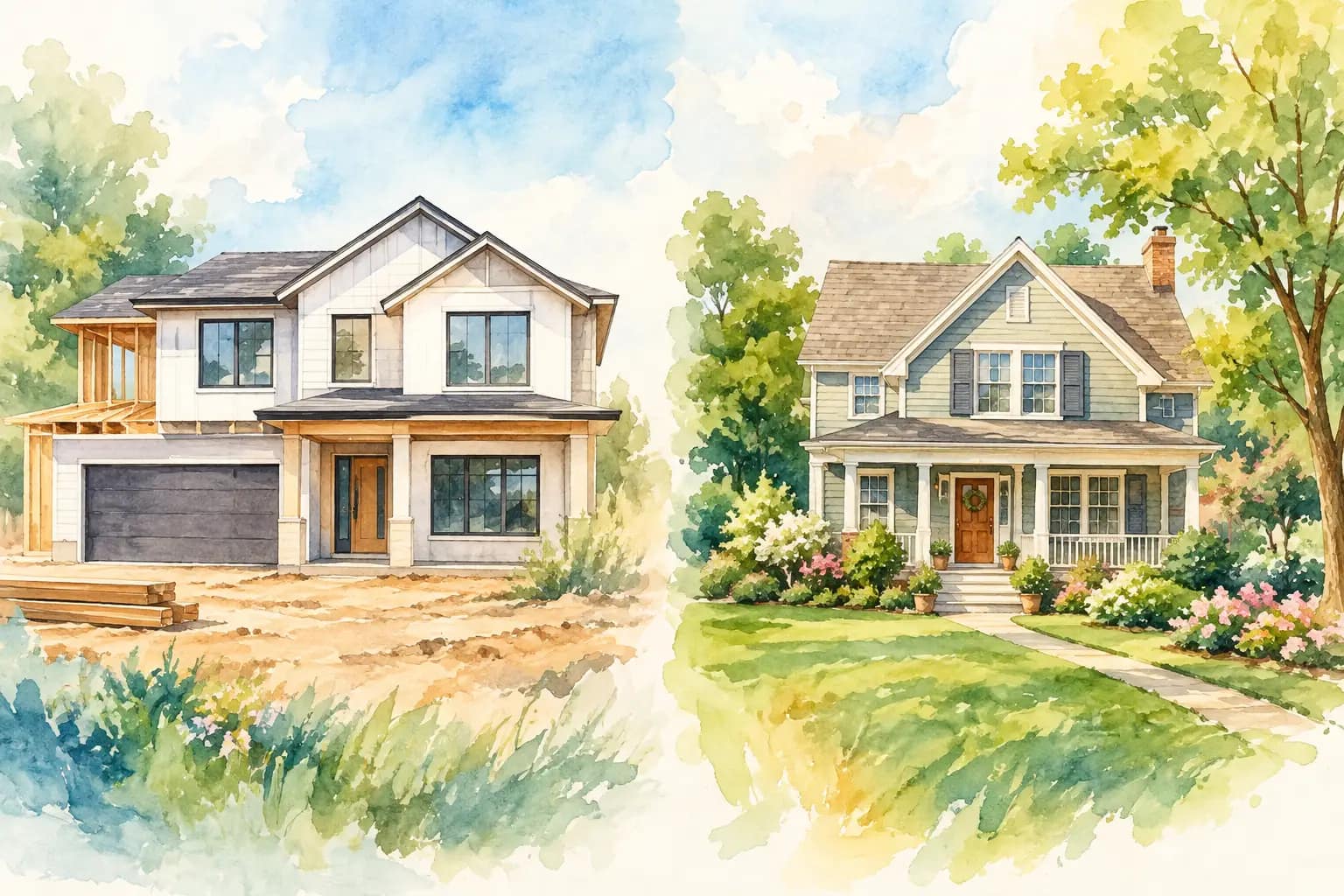
A home can be only a few years old and still feel like a much different purchase than buying directly from a builder. That is the appeal of new construction resale homes: you may get modern finishes, current building standards, and a move-in-ready property without waiting through a construction timeline. But a newer home is not automatically a simpler home. The details behind its condition, warranties, community rules, and original upgrades still matter.
For buyers across Maryland and Delaware, these homes can be especially attractive in growing neighborhoods near Salisbury, coastal communities, and commuter-friendly areas. The right resale can offer the fresh feel of new construction with a clearer picture of what daily ownership actually looks like.
What Is a New Construction Resale Home?
A new construction resale home is a recently built property being sold by its first or an early owner rather than by the builder. There is no universal age cutoff. Some buyers use the term for homes less than five years old, while others include homes built within the last 10 years.
The key distinction is that the home has already been purchased, lived in or held by an owner, and is now being sold through a typical resale transaction. It may be a single-family home, townhome, condominium, vacation property, or investment property.
That difference changes the experience. When you buy from a builder, you often choose a lot, floor plan, design selections, and completion date. With a resale, the decisions have already been made. You can see the finished home, walk the neighborhood, review actual utility costs when available, and understand what the homeowner association has become after residents moved in.
Why Buyers Consider New Construction Resale Homes
The biggest advantage is certainty. A model home can be beautiful, but it does not always show exactly how your finished home will look or what the view from your lot will be. With a resale, what you see is generally what you are buying.
Many newer resales also include upgrades the original owner paid for after purchase. Think finished basements, patio spaces, fencing, custom window treatments, upgraded appliances, garage storage, landscaping, or ceiling fans. Those items can add real value, particularly when buying a comparable new build would mean starting with a base price and adding upgrades one choice at a time.
A resale may also be ready sooner. If you need to move because of a job change, lease ending, family need, or planned beach season, a completed home can be a practical alternative to a build that may take months longer than expected. In Ocean City and other coastal markets, this can be particularly helpful for buyers who want to use a second home or rental property in the near term.
There can be trade-offs. You may not get to choose cabinet colors, flooring, or lot location. The home may have normal wear from its first owner, and the builder’s original warranty may have changed or expired. A recently built resale deserves the same careful review as any other property.
Compare the Total Cost, Not Just the Price
It is easy to compare a resale list price with a builder’s advertised starting price and assume the lower number is the better deal. That comparison is rarely complete.
A builder’s base price may not include the lot premium, structural options, upgraded finishes, appliances, window coverings, landscaping, or outdoor improvements. A resale price may reflect many of those additions already in place. On the other hand, a builder could be offering financing incentives, closing-cost assistance, or rate incentives that change the monthly payment significantly.
Ask for a full side-by-side estimate before deciding. Your comparison should include purchase price, expected loan terms, property taxes, homeowner association or condominium fees, insurance, transfer costs, and the cost of additions you would need after closing. For a coastal property, obtain insurance quotes early. Wind, flood, and condominium master-policy details can materially affect the cost of ownership.
A home that looks more expensive at first may be the better value once you account for completed improvements and a faster move-in. Sometimes the reverse is true. The right answer depends on your budget, timing, and how much customization you truly need.
What to Inspect in a Recently Built Resale
Newer does not mean inspection-free. Every resale buyer should consider a professional home inspection, even when the home is only one or two years old. Construction issues can take time to become visible, and an occupied home may have maintenance needs unrelated to its age.
Look beyond the finishes
Fresh paint and new countertops can distract from the systems that deserve closer attention. An inspector can evaluate the roof, attic, foundation, grading, electrical panel, plumbing, HVAC equipment, windows, doors, and major appliances. In a townhome or condominium, you will also want to understand which components are the owner’s responsibility and which fall under the association.
Pay attention to drainage. Maryland and Delaware weather brings heavy rain, humid summers, and coastal conditions in many areas. Look for water pooling near the foundation, uneven grading, signs of leaks around windows, and moisture concerns in crawl spaces or basements.
Ask about warranties and repairs
Request documentation for transferable builder warranties, appliance warranties, and any work completed under warranty. Some warranties transfer automatically, while others require notice, a fee, or a registration deadline. Never assume a warranty will follow the home without confirming the terms directly.
It is also useful to ask whether the seller completed a builder punch list or submitted warranty claims. A repaired issue is not necessarily a red flag. In fact, it may show that the owner addressed a concern properly. What matters is having a clear record of the problem, repair, and any remaining coverage.
Review permits for finished spaces
A finished basement, deck, patio enclosure, or added electrical work can be a great feature, but confirm that required permits were obtained. Proper permits help protect you from surprises when you sell, refinance, insure, or make future improvements.
Check the Community as Carefully as the House
In a newer neighborhood, the community itself may still be changing. There could be ongoing construction, vacant lots, unfinished amenities, evolving association budgets, or developer-controlled rules. These are not automatic reasons to walk away, but they deserve straightforward answers before you make an offer.
Review the homeowner association or condominium documents, budget, rules, reserves, meeting minutes when available, and any pending special assessments. If a community promises a pool, clubhouse, marina access, or other amenity, confirm whether it is complete, funded, and included in your fees. For condo buyers, especially in vacation markets, understand rental restrictions, pet policies, parking assignments, and occupancy requirements.
Also visit at different times if possible. A quiet weekday morning can feel very different from a Friday evening, a summer weekend, or a holiday week near the beach. Local knowledge matters because the best fit is not only about square footage. It is about how the location works for your routine, guests, work, and long-term plans.
How to Make a Strong, Protected Offer
A newer resale can attract buyers who want modern features without a construction wait. A strong offer starts with a current pre-approval and a clear understanding of your comfortable payment range. If you are considering a second home or investment property, speak with a lender early because financing rules, down payment requirements, and reserve requirements can differ from a primary residence purchase.
Your offer should protect your interests while staying competitive. Inspection, financing, appraisal, and document-review terms should reflect the property type and your risk level. For example, a condominium buyer may need time to review association documents, while a home with a transferable warranty may need a specific review of its transfer process.
Avoid waiving protections simply because the house is newer. A competitive offer does not have to be careless. The best strategy depends on the home’s condition, competing interest, financing, and the seller’s preferred timeline.
When a Newer Resale May Be the Better Choice
A new construction resale is often a strong fit when you want modern design but need a completed home now. It can also work well when the original owner has already handled upgrades that would otherwise add cost and delay. Buyers who value an established view, a finished yard, or a clearer sense of neighborhood life may prefer resale over buying from plans.
Buying directly from a builder may be better if you want specific design choices, have flexibility around timing, or can benefit from builder incentives that outweigh the resale’s improvements. Neither option is automatically better. The goal is to make the choice with complete information rather than a glossy brochure or a quick first impression.
If a recently built home is on your radar, let’s talk through the property, the community, and the numbers behind it. Every Dream Has An Address can help you compare your options clearly, ask the right questions, and move forward with confidence.